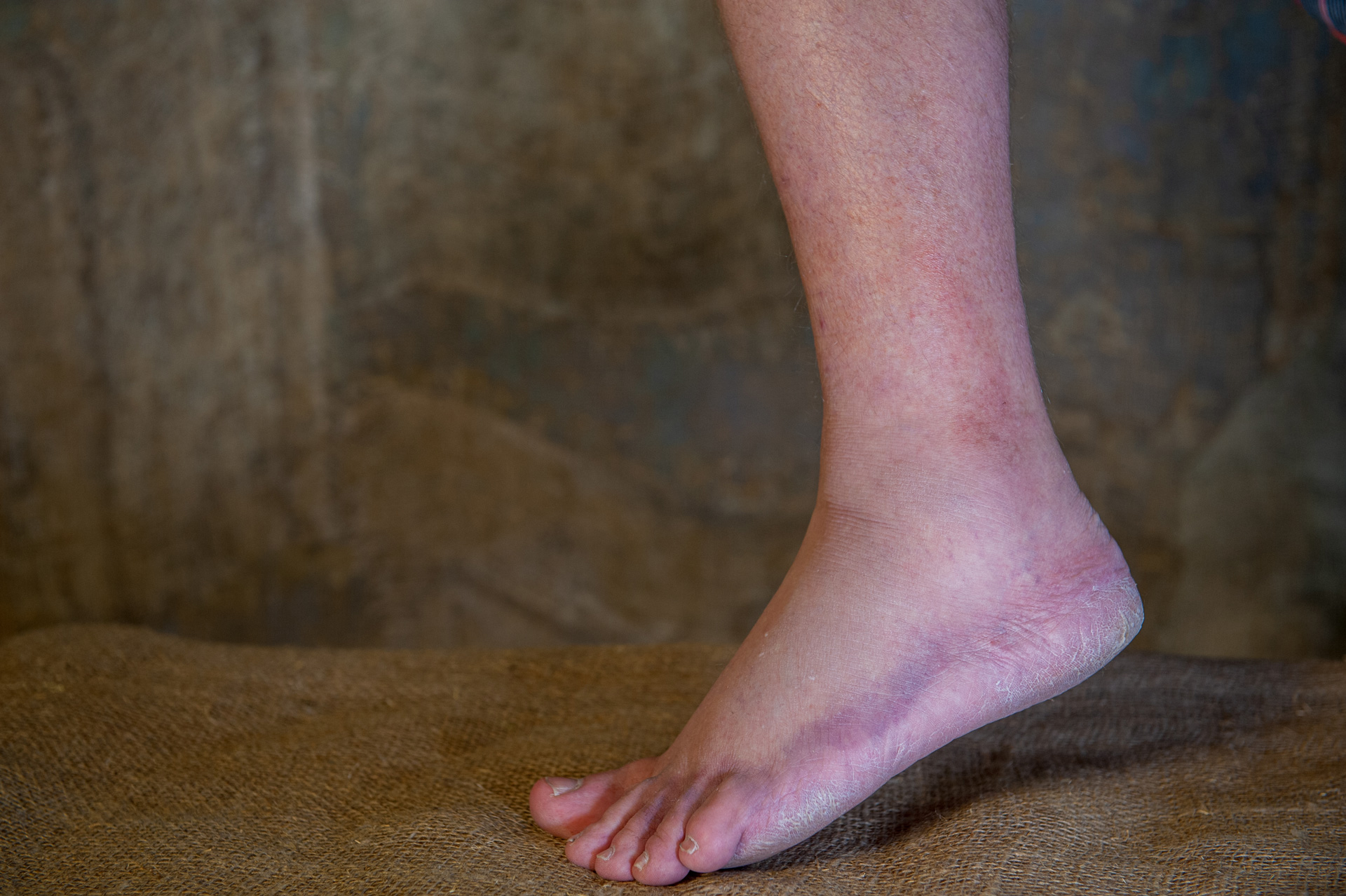
Regenerative medicine may help improve symptoms associated with scar tissue in the foot by supporting the body’s natural healing and tissue-remodeling processes. However, it does not simply dissolve established scar tissue, and results depend on the type, location, age, and severity of the tissue damage as well as the underlying cause of a patient’s symptoms.
For people living with persistent foot pain after an injury, surgery, or chronic condition, scar tissue can sometimes become part of the problem. While scar formation is a normal part of healing, excessive or poorly organized scar tissue may contribute to stiffness, restricted movement, tenderness, or ongoing irritation in certain patients.
Regenerative medicine has gained attention as a nonsurgical approach designed to encourage the body’s own repair processes. Rather than simply masking discomfort, regenerative treatments are intended to improve the biological environment around damaged or irritated tissues. In the foot and ankle, this approach may be considered for certain chronic tendon, ligament, fascia, joint, and post-surgical problems.
For patients wondering whether regenerative medicine can reduce painful scar tissue, it is important to understand what scar tissue is, why it sometimes causes symptoms, and what regenerative treatment can realistically accomplish. An evaluation by a foot and ankle specialist is also important because pain that feels like scar tissue may actually be related to nerve irritation, tendon damage, joint problems, inflammation, altered mechanics, or another condition requiring a different approach.
What Is Scar Tissue, and Why Can It Cause Foot Pain?
Scar tissue is part of the body’s normal response to injury. When a tendon, ligament, muscle, fascia, skin, or other tissue is damaged, the body begins a repair process that includes inflammation, new collagen production, and gradual remodeling. This process helps restore strength to the injured area, but the repaired tissue is not always identical to the tissue that existed before the injury.
In many cases, scar tissue causes no long-term problems. It may gradually become more flexible and organized as healing progresses. In other situations, however, scar tissue can become thick, restrictive, sensitive, or attached to surrounding structures. These changes are sometimes referred to as fibrosis or adhesions, depending on the tissue and location involved.
The foot is particularly vulnerable to symptoms from restricted tissue because it contains many small joints, tendons, ligaments, nerves, and other structures packed into a relatively limited space. Even a small change in how a structure moves can potentially affect walking mechanics.
After foot or ankle surgery, for example, internal scar tissue can sometimes form around tendons or other soft tissues. Following an Achilles tendon injury, plantar fascia problem, ligament sprain, or other soft-tissue injury, remodeled collagen may also be less flexible or organized than the original tissue.
Symptoms can include pain when walking, pulling or tightness, stiffness, tenderness, reduced range of motion, or discomfort during activity. Some people describe a feeling that the tissue is “stuck.”
Before recommending regenerative medicine or another therapy, a specialist must determine whether scar tissue is actually responsible for the symptoms. Persistent pain can have several causes, and treating the correct structure is essential for obtaining the best possible outcome.
Related: Chronic Heel Pain in Runners: When Rest Isn’t Enough
How Could Regenerative Medicine Affect Scar Tissue?
Regenerative medicine focuses on creating conditions that may help damaged tissues repair and remodel more effectively. Instead of mechanically cutting away scar tissue, these treatments are generally intended to influence the healing environment surrounding an injured or chronically irritated area.
Depending on the patient’s condition and the treatment being considered, regenerative approaches may involve biologic materials, platelet-derived treatments, or other therapies designed to stimulate a healing response. The precise biological effects vary depending on the therapy.
Several processes are particularly important:
- Supporting tissue remodeling. Scar tissue changes over time as the body builds, breaks down, and reorganizes collagen. Regenerative treatment may support biological signals involved in this remodeling process.
- Encouraging local healing activity. Chronic injuries sometimes remain painful because the normal healing response has slowed or stalled. Certain regenerative medicine approaches attempt to create a more active repair environment around the affected tissue.
- Supporting healthier soft tissue. When tendons, ligaments, fascia, or other tissues surrounding an area of scar formation are damaged, improving their healing may help restore better function even if some scar tissue remains.
- Addressing the source of symptoms. A patient’s discomfort may come from a combination of scar tissue, chronic tissue damage, inflammation, mechanical stress, and restricted movement. Treatment that improves the condition of the injured structure may reduce symptoms without completely eliminating scar tissue.
This distinction is important. Regenerative medicine should not be viewed as an injection or procedure that automatically dissolves fibrosis. Mature scar tissue can be difficult to change, and some adhesions or structural problems may require physical therapy, mechanical treatment, or surgery.
The goal is therefore often functional improvement: reducing discomfort, improving mobility, and helping the affected tissue tolerate normal activity more effectively. Whether regenerative treatment is appropriate depends on an accurate diagnosis and a careful assessment of the individual foot or ankle problem.
Related: Understanding the Cost vs. Long-Term Value of Regenerative Care
Can Regenerative Medicine Completely Remove Established Scar Tissue?
Patients often ask whether regenerative medicine can make scar tissue disappear completely. In most cases, that is not the most realistic way to think about treatment.
Once mature scar tissue has developed, the body’s remodeling process may continue, but the tissue does not necessarily return to exactly the way it looked or behaved before the original injury. Regenerative treatments are generally used to encourage healing and improve tissue quality rather than physically remove an established scar.
The difference between reducing scar-related symptoms and removing scar tissue is significant. A person may experience less pain, greater flexibility, or better function even though imaging or examination still shows evidence of the original injury and healing response.
The age of the scar may also matter. Tissue that is still actively healing behaves differently from dense, mature fibrosis that has been present for years. The location is equally important. A superficial skin scar, an adhesion surrounding a tendon, and fibrosis deep inside a joint are different conditions and may require different treatments.
Some patients may also have mechanical problems contributing to their symptoms. For example, abnormal foot motion may continue placing stress on a previously injured tendon or fascia. Treating the biological environment without correcting the mechanical stress may limit the benefit of any treatment.
For these reasons, regenerative medicine works best when considered as part of a complete treatment strategy rather than as a stand-alone solution for every type of scar tissue.
A foot and ankle specialist can examine the affected area, review the history of the injury or surgery, evaluate movement and biomechanics, and determine which structures appear to be causing the symptoms. The goal is not necessarily to erase every trace of scar tissue. It is to determine whether improving the health and function of the affected tissues could help the patient move more comfortably.
Related: When Surgery Is Necessary—and When It’s Not
What Types of Foot Problems Can Involve Painful Scar Tissue?
Scar-related discomfort in the foot or ankle can develop after many different injuries and procedures. Surgery is an obvious example because both the skin and deeper tissues must heal after an incision. Internal scar formation can sometimes develop around tendons, ligaments, nerves, or surgical sites, potentially producing tenderness, tightness, or restricted movement.
Traumatic injuries can produce similar changes even when surgery was never performed. A severe ankle sprain damages ligament fibers, for example. An Achilles tendon injury affects dense connective tissue that must reorganize as it heals. Repetitive injuries involving the plantar fascia or other structures may also lead to chronic tissue changes.
The presence of previous injury does not mean scar tissue is automatically responsible for continuing pain. A previously injured tendon may still contain degenerative changes. A joint may have developed arthritis. A nerve may be irritated or compressed. Foot mechanics may continue overloading a particular structure. These conditions can produce symptoms that patients understandably attribute to “scar tissue.”
That is why diagnosing the source of the discomfort is one of the most important steps before considering regenerative medicine.
When symptoms are associated with chronic soft-tissue damage, a regenerative approach may be considered as part of the treatment plan. The objective is typically to improve healing conditions around the affected structure and potentially restore function rather than simply target scar tissue as an isolated problem.
Treatment may also be combined with rehabilitation, stretching, strengthening, changes in footwear, orthotics, activity modification, or other therapies. Addressing both tissue health and the forces placed on the foot can be particularly important because the foot must repeatedly absorb body weight during everyday walking.
The appropriate treatment depends on what caused the original damage, how long symptoms have been present, which structure is involved, and how the problem affects the patient’s daily activities.
Related: Is Regenerative Medicine Safe? Addressing Common Patient Concerns
Who May Be a Candidate for Regenerative Medicine for Foot Scar Tissue?
Not every patient with foot pain or scar tissue needs regenerative treatment. Many recent injuries improve with appropriate conservative care, and some established structural problems may require a different solution. Regenerative medicine is generally considered after the underlying condition and source of pain have been clearly identified.
A specialist may consider this type of treatment for patients who have persistent symptoms associated with chronic tissue injury or a previous procedure, particularly when conventional conservative treatments have not produced adequate improvement.
Factors a foot and ankle specialist may evaluate include:
- How long the pain, stiffness, or restricted movement has been present
- Whether symptoms started after surgery or a specific injury
- Which tendon, ligament, fascia, joint, or other structure appears to be affected
- Whether previous conservative treatments have been attempted
- How much the condition interferes with walking, work, exercise, or normal activities
- Whether an underlying biomechanical problem continues stressing the injured area
- The patient’s overall health and ability to heal
- Whether another condition could better explain the symptoms
Patient expectations are equally important. Regenerative medicine cannot guarantee that all scar tissue will disappear or that every patient will become completely pain-free. The potential benefit depends heavily on the diagnosis.
Someone with a chronic tendon problem and associated tissue changes, for example, presents a different situation from a patient with a dense mechanical adhesion that physically prevents a tendon from moving normally. The second problem might ultimately require a treatment that physically releases the adhesion.
This is one reason individualized evaluation is so important. At Mid-Ohio Foot and Ankle Specialist, regenerative options can be considered within the context of the patient’s complete foot or ankle condition rather than based on symptoms alone.
For appropriately selected patients, the goal may be to encourage healthier tissue remodeling, reduce chronic discomfort, restore mobility, and potentially help the patient avoid or postpone more invasive treatment when medically appropriate.
What Should You Expect When Discussing Regenerative Treatment With a Foot and Ankle Specialist?
The first step should be determining why the foot hurts rather than immediately deciding on regenerative treatment. During an evaluation, a foot and ankle specialist will typically review when the symptoms began, whether there was an injury or surgery, which activities make the problem worse, and what treatments have already been attempted.
The physical examination can provide important information about tenderness, swelling, joint movement, tendon function, strength, stability, sensation, and foot mechanics. Depending on the problem, imaging or other diagnostic testing may also be appropriate.
If scar tissue appears to contribute to the symptoms, the specialist can determine whether the primary issue involves restricted movement, an injured tendon or ligament, joint damage, nerve irritation, chronic inflammation, or another problem.
That distinction helps guide the treatment plan.
For some patients, rehabilitation and mobility work may be the most appropriate approach. Other patients may benefit from changes in footwear, orthotics, strengthening, activity modification, or treatments aimed at the underlying tissue. Regenerative medicine may be discussed when the diagnosis and treatment history suggest that stimulating a new healing or remodeling response could be appropriate.
Patients should also understand that tissue healing takes time. Regenerative treatment is not the same as a medication that temporarily blocks pain. When the objective is to influence repair processes, changes may occur gradually as the body responds.
Follow-up is important because the treatment itself is only one part of recovery. Managing activity levels and correcting the factors that originally stressed the injured structure may also influence long-term results.
Most importantly, treatment should be individualized. Two patients with discomfort in the same part of the foot may have completely different underlying problems. A careful evaluation helps determine whether regenerative medicine is a reasonable option, whether another conservative treatment would be more appropriate, or whether a mechanical problem requires a different intervention.
Frequently Asked Questions
Does regenerative medicine dissolve scar tissue in the foot?
Not exactly. Regenerative medicine is generally intended to support healing and tissue remodeling rather than directly dissolve established scar tissue. Some patients may experience better mobility or less discomfort even if scar tissue remains.
Can regenerative medicine help with pain after foot or ankle surgery?
It may be considered for certain patients with persistent post-surgical pain when damaged or poorly healed soft tissue is contributing to their symptoms. A specialist must first determine whether the pain is related to scar tissue, a nerve, joint damage, biomechanics, or another cause.
How do I know if scar tissue is causing my foot pain?
Symptoms such as tightness, tenderness, pulling, or restricted movement can occur with scar tissue, but they can also result from several other foot and ankle conditions. A clinical examination, and sometimes imaging or additional testing, can help identify the actual source of the problem.
If lingering foot or ankle pain, stiffness, or scar-related discomfort is affecting your mobility, a personalized evaluation can help identify the underlying cause and determine whether regenerative medicine may be appropriate for you.
Contact Mid-Ohio Foot and Ankle Specialist in Lewis Center, Ohio, to schedule an appointment with Vincent J. Staschiak – DPM, FACFAS, APWHC. Dr. Staschiak can evaluate your condition, discuss available treatment options, and help develop an individualized plan aimed at improving foot and ankle function and getting you back to the activities that matter to you.